
You’ve thought about every detail. Your wedding guests are paying attention to something else.
After a year of planning, the smallest decisions start to carry a surprising amount of weight. You’ve looked at the table from every angle. You know why you chose that linen, how many versions of the menu came before this one, and which flower you swapped at the last minute. Your wedding guests walk into the finished room without knowing any of it.

Planning weddings year after year makes one thing clear: the decisions couples spend the longest debating aren’t always the ones guests respond to most.
A beautiful room gets a reaction, but so does an incredible dinner, great entertainment, warm service, and a party no one wants to leave. The best weddings treat it all as one night rather than a series of separate decisions.

The Details That Deserve to Be There
At a certain point, almost anything is possible. You can customize every surface, monogram every object, and create something new for every part of the weekend. That doesn’t mean you need to.
The details that work best are the ones that belong where they are: sunscreen by the pool, water waiting after a late night, flip-flops beside a full dance floor instead of tucked into a welcome bag on day one. Timing is what makes them land. At a destination wedding, something local in the room that wedding guests will want to take home connects them to the place in a way a generic favor never will.
That thinking applies to the beautiful things too. A custom menu, incredible linens, or something made specifically for the table can be part of what makes a dinner memorable. The point isn’t to choose practical details over beautiful ones. It’s to make sure what you’re adding has a reason to be there, whether that reason is useful, personal, or simply because it makes the setting that much more beautiful.
The bigger investments deserve the same consideration. Great food reaches every person in the room. Entertainment can change the direction of the night. Lighting carries a dinner setting into the party. And a properly staffed bar means cocktail hour is spent having cocktails, not waiting for one.
The napkin fold and the menu card still matter, and guests notice beautiful details. But the prettiest table in the world still needs a great dinner around it, and an outdoor ceremony with a perfect view only works if everyone is comfortable enough to enjoy it.
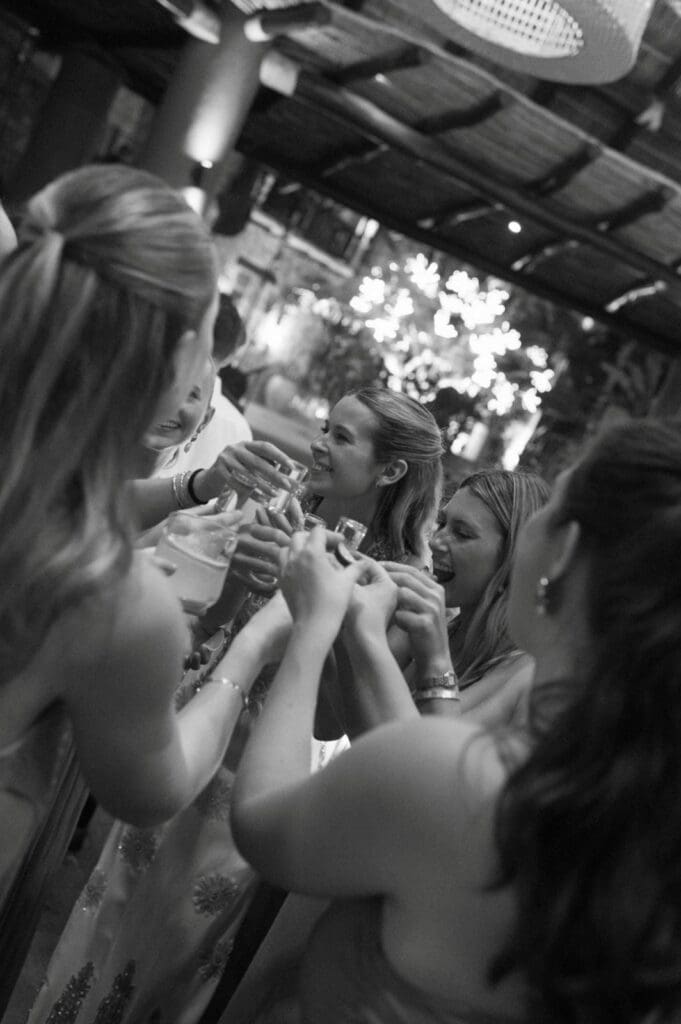
The Things Wedding Guests Shouldn’t Have to Think About
Much of the work behind a wedding is work guests never see.
When service is right, no one counts staff or wonders where the catering team is working from. Their glass gets filled, dinner moves at the right pace, and they’re free to enjoy the people at their table.
For an outdoor ceremony, the setting is only part of it. We’re looking at where the sun will be at that exact hour and how long everyone will be sitting in it. In the heat, shade, cold drinks, and moving air all matter. If the temperature drops after sunset, turn on heaters before anyone goes looking for one.

Never underestimate the bathrooms. They should be spotless when the first guest arrives, stay that way all night, and be stocked with the small things people end up needing. It’s not the glamorous part of planning, but wedding guests notice it.
Transportation should be just as invisible. When a destination weekend moves between locations, everyone should know where they’re going and how they’re getting there without having to figure it out themselves.
Timelines & Transitions
The transitions inside the wedding deserve that same attention. Moving a room full of people from the ceremony to cocktails and then into dinner sounds simple on a timeline. In reality, we are thinking about where everyone is walking, who is directing them, whether the bar is ready when they arrive, and whether the next space is ready to receive them. Guests shouldn’t arrive somewhere and wonder what they’re supposed to do next.
The timeline also decides how long people are asked to sit, stand, wait, and listen before the energy needs to change. Five extra minutes in the right place is nothing; twenty extra minutes in direct sun or between dinner courses feels very different. Wedding guests don’t need to know what the timeline says. They should just enjoy where it takes them.

Luxury Looks Different From the Guest Side
For guests, luxury isn’t knowing what something cost. It’s having what they need before they think to ask.
That matters even more at a destination wedding, which asks a lot of guests before the first event begins. They’re booking flights and hotels, taking days away from home, and could have more than one destination wedding on the calendar that year.
Keep that in mind as you plan the weekend. Not every open hour needs an event, and not every event needs to come with another expense. Lunch by the pool, an afternoon exploring, or a few hours with nothing planned won’t take away from the rest of the weekend. It gives wedding guests room to enjoy where they are.
It is easy, especially when you have the ability to do almost anything, to assume that adding more means giving guests more. Another event, another activity, or another elaborate plan can be incredible when it adds something to the weekend. But guests are also on vacation. Giving them a little time to sleep in, sit by the pool, or go somewhere on their own can be just as welcome as what you have planned for them.
A destination wedding can be fabulous without asking guests to participate in every hour of it. The goal is a weekend people are excited to be part of, not one they need a vacation from when they get home.

The One Thing You Can’t Outsource
One part of the wedding guest experience can’t be handed to a planner, designer, or production team: making time for the people who came.
I always tell couples to say hello to every guest. It sounds obvious until the wedding starts. Between photos, entrances, dinner, and speeches, the night moves much faster than you expect, and it’s easy to reach the end of it having barely spoken to people who flew in to be there.
It doesn’t need to be a formal moment on the timeline or a long conversation with everyone. Even a quick hello and a few minutes together can mean a lot, and they’ll remember it.
After months of thinking about what your guests will see, eat, and do, leave enough room in the night to enjoy them too.
Happy planning!




Pinterest
/
Share on
facebook