
The conversation around reception table design has changed. It used to center on what sat on top of the table: the florals, the candles, the linens, the place settings. The table itself was almost beside the point.
That is no longer true, and it has made for better receptions.
In 2026, the table is no longer just a surface. It is the design. Couples are approaching it that way from the very beginning, and the results are some of the most intentional, beautiful, and guest-forward receptions we have ever produced.

Start With the Room, Not the Reception Table Centerpiece
The best reception design conversations do not start with centerpiece height or linen color. They start with a question: how should this room feel when guests walk in?
From there, everything else follows. How guests are seated, how they move through the reception space, how the mood builds from cocktails through the last song. The reception table layout shapes all of it. It influences sightlines, service flow, and the way conversation happens across the room. When you treat it as a foundational design decision rather than a logistical checkbox, everything else falls into place more naturally.
This is especially true in destination weddings, where the setting plays such a leading role. An oceanfront reception in Cabo calls for a completely different approach than a historic courtyard in Mexico City or a celebration overlooking the Caribbean in Cartagena. The most successful floor plans we design are built in response to the venue, not pulled from a template.

The Centerpiece Conversation We Keep Having
One of the most common places where design and function come into tension is the centerpiece, specifically the oversized one. Dramatic floral installations make a striking first impression, and we love them. But if guests have to lean around an arrangement to speak with the person across from them, or if sightlines are blocked, or if the table feels so crowded with décor that there is no room to comfortably dine, the guest experience starts to suffer.
And this is where the conversation has to include how food is actually being served, because it changes everything about what is realistic on the table. A centerpiece that works beautifully for a plated dinner becomes a real problem the moment large serving platters need to move around it.

Family-style dining, which is having a genuine moment at weddings right now, requires a completely different approach to reception table design. The platters, the bowls, the shared dishes all need room to land and be passed. That means centerpiece scale, table width, and how much decorative layering is practical all need to be decided with the service style in mind, not after.
We always encourage couples to land on their service style before any reception table design decisions are made. Whether it is a course-plated dinner, family-style, or something in between, that choice is the foundation on which everything else is built.
Scale, proportion, and table width all matter. So does the relationship between the centerpiece and everything else on the table: the place settings, the glassware, the candles, the paper goods. A tablescape that works is one where every element has been considered in relation to the others, not just styled in isolation.
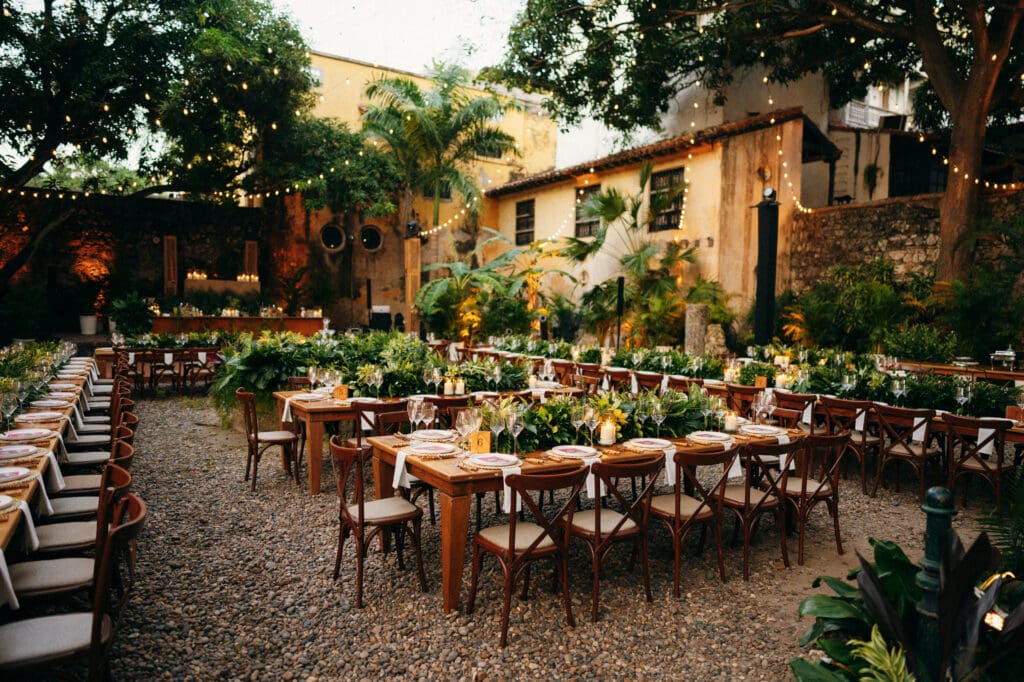
Serpentine Reception Tables | Everything You Want to Know
Serpentine tables are one of the most requested layouts we see right now, and it is easy to understand why. They introduce movement and flow into a reception space and soften the overall look of a room. When photographed from above, they are genuinely spectacular.
We have designed some of our favorite receptions around serpentine layouts. We have learned what it takes to make them work well. That knowledge is what separates an effortless serpentine table from one that creates headaches behind the scenes.

Serpentine reception tables require more square footage than traditional banquet tables. This detail matters in venues where space is at a premium. They increase rental and linen costs because of the custom sizing involved. They require closer coordination with the catering team because service flow around a curved layout is invariably more complex. Seating placement deserves real attention. Certain positions along a serpentine can make it difficult for guests to have a clear sightline during toasts or key moments in the evening.
It is also worth noting that family-style service and serpentine tables require particularly careful planning together. The curves create natural pinch points where platters are harder to move. Therefore, the catering team needs to be part of the design conversation early rather than being handed a floor plan at go-time.
When the venue supports it, the budget accounts for it, and the logistics are planned around it, a serpentine table is extraordinary. It is simply a choice that deserves the same intentionality as every other decision in the room.

Why Mixed Layouts Often Win
One approach we have been leaning into is designing receptions around a combination of table shapes, rather than committing to a solo format. It is one of the most effective ways to create a reception that feels both visually dynamic and genuinely comfortable for guests from every corner of the guest list.
Long banquet reception tables naturally encourage interaction and create a sense of shared celebration. Rounds tend to work beautifully for families and guests who may not know one another well. When you combine the two thoughtfully, the room feels considered and alive rather than repetitive. Guests move more naturally through the space. Conversations feel less segmented. The whole room breathes better.
A serpentine table can serve as the design focal point. Rounds and banquet tables handle the rest of the guest experience with more flexibility and service efficiency. That combination, when appropriate for the venue and guest count, often outperforms any single-table format on its own.

The Table as a Full Design Composition
What has really changed is that the table is no longer being treated as a surface for a centerpiece. It is being designed as a complete composition in which every element contributes to a larger visual and experiential story.
Linens, candlelight, textured materials, custom paper goods, sculptural florals, and curated tabletop details work together to create an immersive experience rather than simply decorative pieces. The goal is not more. It is depth and dimension. There’s a difference between a styled table and a designed table, which guests feel, even if they cannot articulate it.
The guiding principle in every space we work in is the same: guests should feel welcomed by the table, not overwhelmed by it. The most memorable ones are elegant rather than excessive, inviting rather than intimidating.

What We Are Really Designing
The receptions people remember are rarely remembered for a specific flower or a particular linen. They are remembered because guests felt comfortable and connected. Conversation came easily, because the evening moved from dinner to toasts to dancing, and no one wanted it to end.
That does not happen by accident. It comes from treating the table as a design decision from the onset. Layout and flow are considered before a single centerpiece is sketched. Questioning whether the choices being made are serving the guests sitting around the table or just serving the photograph.
Start with the experience you want your guests to have. Everything else, the flowers, the linens, the layout, will follow from there.
Happy Planning!



Pinterest
/
Share on
facebook