A mood board doesn’t need to tell the whole story. It just needs to open the right one.
Every bride knows what she’s drawn to. Whether it’s a precise idea or a faint instinct. The trick isn’t gathering pretty photos. It’s translating taste into something your planner can build from. A mood board doesn’t collect things; it communicates a language, a tone, a mood.

Pinterest is having a comeback, but its real value shows when you use it beyond wedding searches. Architecture, interiors, art, fabrics, fashion, silhouettes, textures.
These kinds of images often reveal your taste more accurately than rows of similar wedding photos. A board built from different creative worlds gives your planner far more to work with.
Mood Over Matching
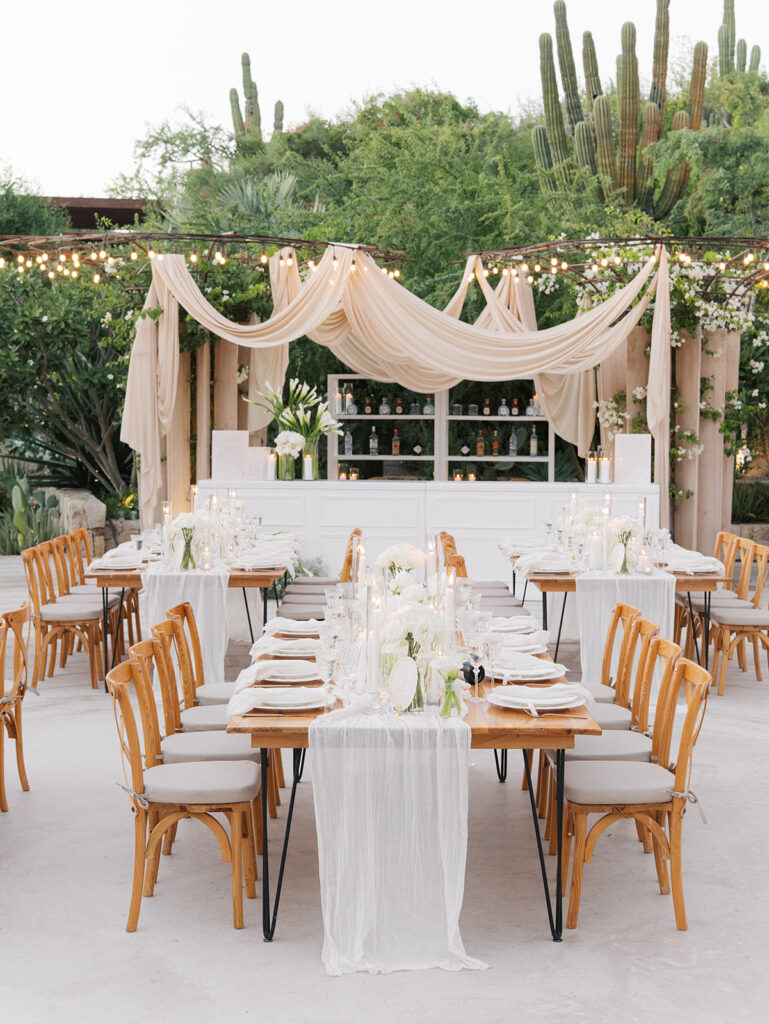
Color can be part of your board, but mood is what does the heavy lifting. Some couples lean toward softness, others toward structure; some toward coastal brightness, others toward richer shadows.
Your planner reads these tonal cues immediately. They frame the conversation before a single detail is discussed. A board that prioritizes feeling instead of formulas creates a clearer starting point.
The Details That Quietly Shape the Vision
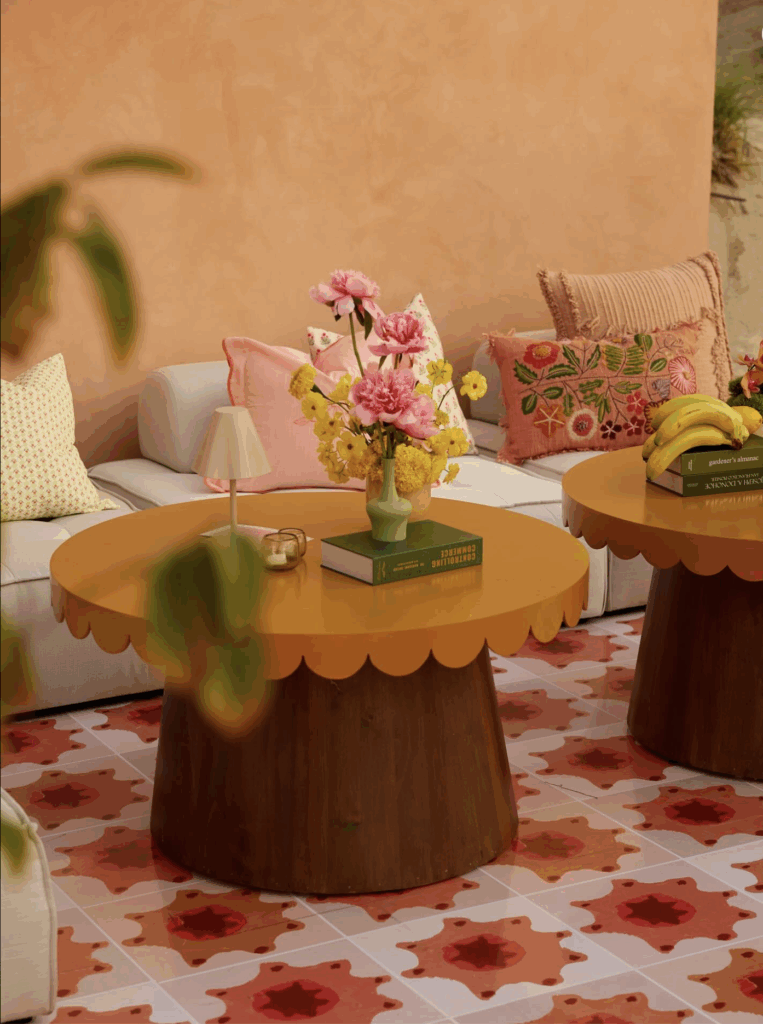
Lighting, texture, and silhouette have a way of communicating what words can’t. An image with movement, grain, reflection, contrast, or architectural form says something about what you’re drawn to, even if you’re not fully aware of it. These cues give your planner a visual language to respond to, and once that language exists, the design begins to build itself.
Planners read between the lines. They take the essence of what you’ve shown and elevate it beyond what mood boards alone can say. The board guides the process; it never confines it.

Fashion Sets the Tone More Than You Think
Your personal style inevitably influences the design. Tailoring, volume, metal, satin, pearls, clean lines, draping. These details shape the larger aesthetic. Fashion imagery communicates proportion and attitude instantly. Sometimes, one runway shot sets the tone for an entire direction.
A Curated Board Doesn’t Need to Be Complicated
You don’t need to be a Canva queen or king to create a strong mood board. This isn’t about perfect layouts or graphic skills. What matters is choosing imagery that feels honest to your taste.
Boards don’t need volume; they need clarity. A handful of intentional selections always speaks louder than a collage of almosts. When the imagery feels chosen rather than collected, your planner has room to interpret and translate. The board says the most when it reflects the least.

Inspiration Comes From Everywhere
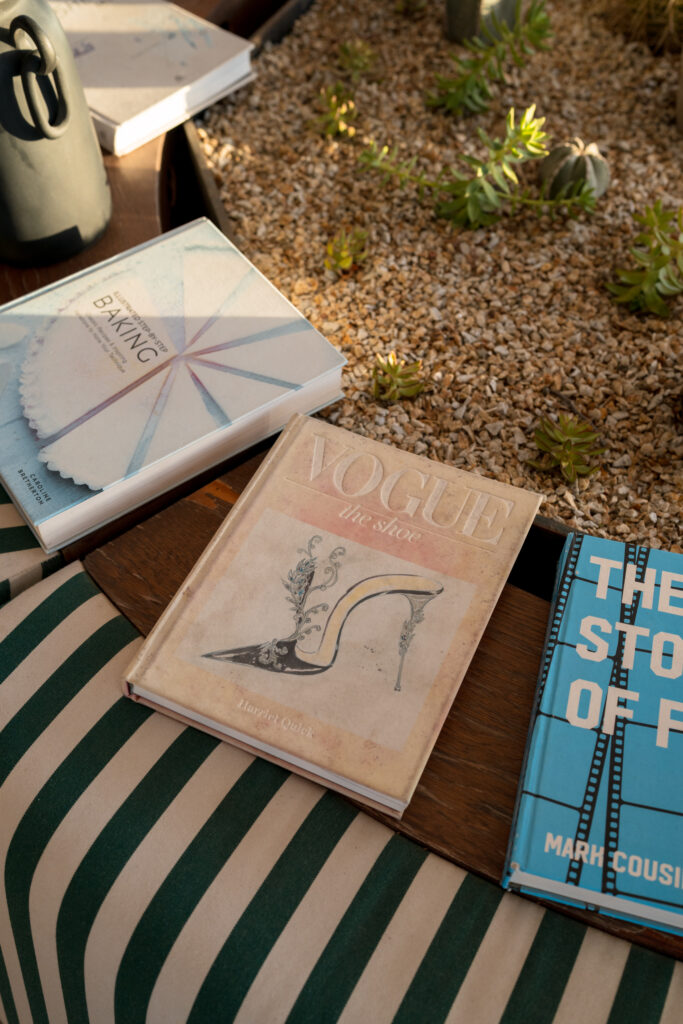
Many couples forget how much inspiration lives outside the screen. A hotel lobby you loved. The light in a café at a certain hour. A page from a coffee table book. The curve of a doorway. A scent, a fabric, a piece of pottery, a gallery space, a boutique you lingered in.
These sensory moments shape taste just as much as styled images do. They belong on your board because they help your planner understand not just what you like, but who you are.
Let the Destination Influence the Story
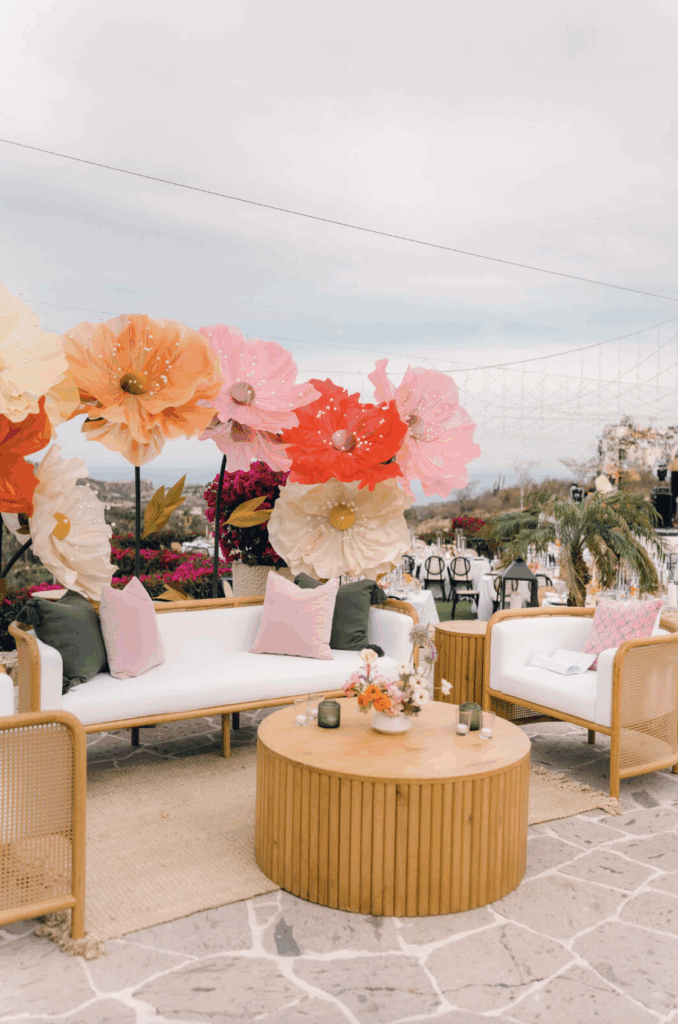
Your location already has a visual rhythm. Think Cabo, Amalfi, Lake Como, Napa, and San Miguel. Each carries distinct architecture, light, texture, and atmosphere. When your board acknowledges the setting, the design becomes more connected without becoming themed. It’s not about matching the location. It’s about letting it sit naturally inside the aesthetic.

Mood Boards as a Space for What Matters
A mood board can also hold your non-negotiables. Not in a literal sense, but as reminders of what feels essential to you. A type of lighting. A structural floral moment. A textural detail. An energy you want guests to feel.
The board becomes a way to gather the pieces of a celebration that matter most and bring them to your planner’s attention in an easy-to-read, easy-to-interpret format.

Designers Respond to Taste, Not Templates
Some of the most compelling boards mix categories freely: interior spaces, sculptures, runway images, material swatches, art, textures, lighting studies, beauty editorials.
These references create a sense of identity rather than imitation. Your planner doesn’t expect a finished idea. They expect insight. Once they understand your taste, they expand it in ways even the best mood board can’t anticipate.
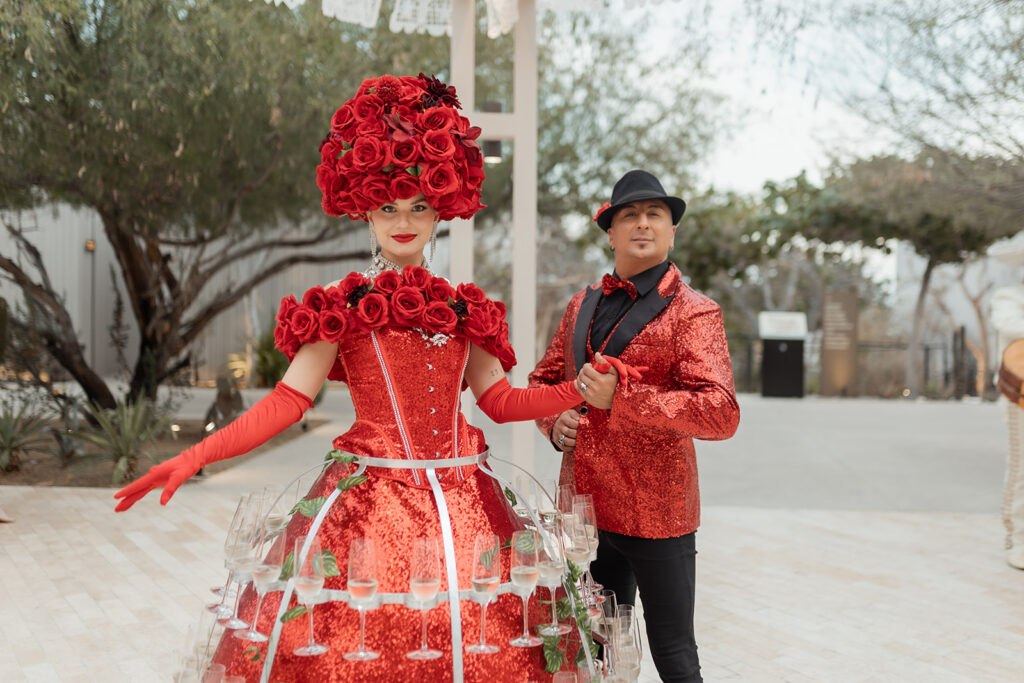
A mood board isn’t meant to solve the design. It’s meant to spark it. When you share the images, textures, and references that feel like you, your planner can translate them into something layered, dimensional, and unexpected.
The board starts the conversation, but the design grows far beyond what’s pinned. That’s the beauty of working with a team that knows how to read between the lines.
Happy Planning!




Pinterest
/
Share on
facebook